The purchase of Paramount and CBS by David Ellison – scion of Larry Ellison, the world’s third-richest man, with a $250 billion tech fortune – marks a shift away from one-party domination of the media and culture. It follows Elon Musk’s takeover of Twitter, now X, and the Trumpian capture of Washington DC’s Kennedy Center.
Long a cakewalk for progressives, the culture war is edging towards high noon. For the first time in decades, the left faces competitors who read from different scripts and come from different perspectives.
Naturally, progressives are not happy. Robert Reich, a leading left-wing economist, denounces – rightly – the ability of the ultra-rich to buy media outlets and push an agenda. Yet he and others had no such qualms when Jeff Bezos bought the Washington Post, when Salesforce’s Marc Benioff snapped up the moribund Time magazine, when Laurene Powell Jobs took over the Atlantic, or when another well-endowed heir purchased the New Republic from Facebook co-founder Chris Hughes.
Perhaps most unsettled are those who profited from decades of one-party cultural rule, stretching from Hollywood and Silicon Valley to Manhattan. Bari Weiss’s pledge to ‘blow up’ CBS – Paramount has announced plans to lay off 2,000 workers in Hollywood and New York – alarms the likes of Katie Couric, the onetime CBS star, nominally because it undermines ‘independent journalism’. Progressives will certainly attack CBS for moving away from promoting climate hysteria, which no longer enjoys its own special desk. Worse still for the left, conservative voices – such as the ubiquitous Mormon Wives, glamorous mothers and reality-TV stars who stand in sharp contrast to the over-the-top Kardashians – are gaining traction on television.
Why is this happening now? The re-election of Trump, the ultimate anti-wokist, has emboldened some oligarchs to enter what was once the exclusive domain of the left. But political power alone does not explain the shift. Trump’s influence will fade, after all. Demographics and customer preferences matter more.
Mainstream media have become disconnected from at least half their audience. Overall public confidence in the press is near a historic low: barely a third express trust, half the share that did so in 1978. This is not just an American phenomenon – the travails of the once-respected BBC in the UK make that clear.
The gulf between the media and audiences widened after the George Floyd riots, when major media companies – in print, film, radio and online – doubled down on an ever more overt progressivism. They downplayed far-left violence and embraced a mission not of informing or entertaining, but of ideological propagation.
Read the rest of this piece at: Spiked.
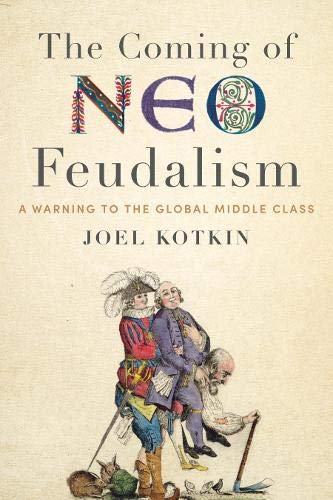
Joel Kotkin is the author of The Coming of Neo-Feudalism: A Warning to the Global Middle Class. He is the Roger Hobbs Presidential Fellow in Urban Futures at Chapman University and and directs the Center for Demographics and Policy there. He is Senior Research Fellow at the Civitas Institute at the University of Texas in Austin. Learn more at joelkotkin.com and follow him on Twitter @joelkotkin.
Photo: IMDB/House of David
 Email this Story